
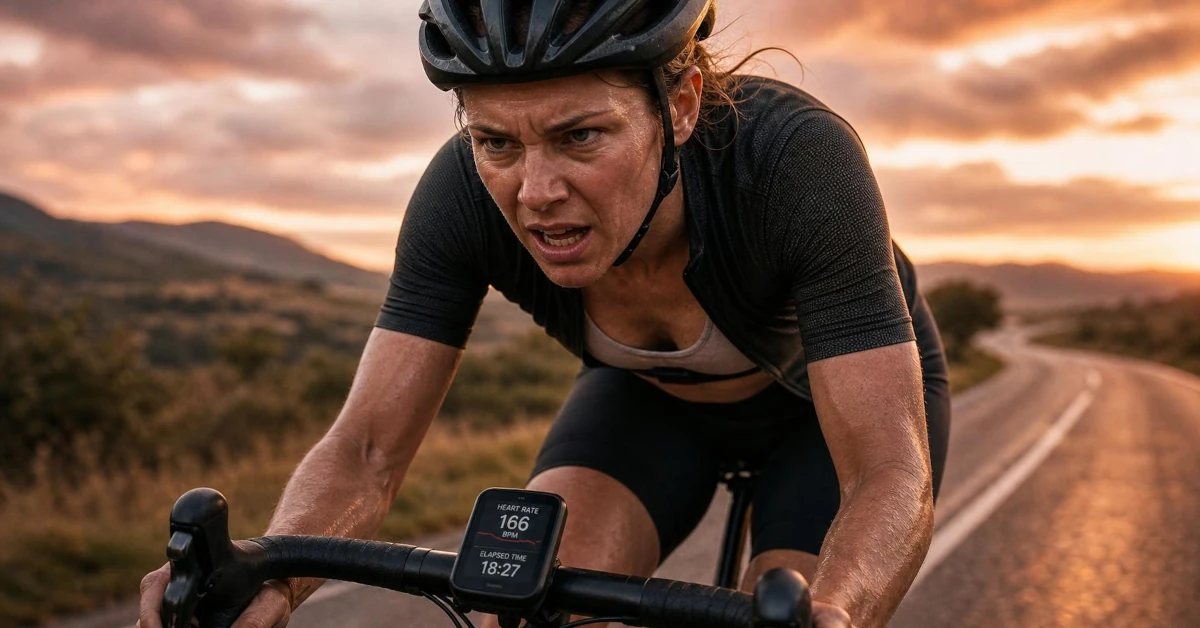
A Zone 2 ride on one training plan can be a hard tempo effort on another. The reason is usually the anchor: most zone systems build off your age-based max heart rate, which is a rough guess at best. Joe Friel, the coach behind The Cyclist's Training Bible and The Triathlete's Training Bible, built his zone system off something you can measure directly: your lactate threshold heart rate, or LTHR.
Testing it takes 30 minutes and a heart rate monitor. What you get back is 7 zones calibrated to your real, current fitness, not a formula based on how old you are.
What Is LTHR?
LTHR is the heart rate at which lactate starts building up in your blood faster than your body can clear it. Below that point, effort feels sustainable for a long time. Cross it, and fatigue builds fast, usually within minutes. It's a real physiological marker, not an estimate, which is why Friel built his entire 7-zone system around it instead of around age or resting heart rate.
The practical upside: your max heart rate barely moves over a training cycle, but your LTHR does. As you get fitter, you can sustain a higher heart rate before lactate piles up, so LTHR-based zones adjust with your fitness, as long as you retest periodically. Friel's own guide recommends testing early in the Base and Build periods, the start of each major phase of a training plan.
How to Test Your LTHR
Friel's protocol is a 30-minute solo time trial at the hardest pace you can hold for the entire 30 minutes, on your own, not drafting behind someone else. At the 10-minute mark, hit the lap button on your heart rate monitor. When you finish, check your average heart rate for the final 20 minutes. That number approximates your LTHR.
Example: A cyclist rides a 30-minute solo time trial and finishes with an average heart rate of 165 bpm across the last 20 minutes. That 165 becomes their LTHR, and every zone below is built from it.
Pacing matters more than anything else here. Go out too hard in the first 10 minutes and fade, and the 20-minute average drops below your real threshold. Hold back too much, and you never reach it at all. If a result feels off compared to how the effort felt, retest on a better day rather than trusting a badly paced number. A recent hard race close to threshold effort, a 10-mile time trial for cycling or a hard 10K for running, is a reasonable substitute if you'd rather not schedule a dedicated test.
Set the test up so the result reflects your fitness, not the conditions. Warm up for 10 to 15 minutes, including 2 or 3 short efforts near race pace, so your heart rate isn't still climbing from rest when the lap button goes. Pick a flat route or an indoor trainer where you can hold a steady effort without stopping for lights or turns. Heat and dehydration push heart rate higher at the same effort, so a test on a hot day or on a trainer with no fan can inflate your LTHR. Test under similar conditions each time, so a change in the number means a change in fitness.
How Accurate Is the 30-Minute Test?
Close enough to set training zones. A 2005 study of 27 competitive distance runners and triathletes compared the 30-minute time trial against a lab test that measured blood lactate directly, along with 3 other field methods. The 30-minute trial estimated threshold heart rate with a standard error of about 8 bpm, and it was the only method that matched the lab result for both pace and heart rate.
That study tested runners, so the evidence for cyclists is less direct, though the protocol works the same way on the bike. An 8 bpm margin also means your result is an estimate, not an exact line. Treat it as your best current number, and watch the trend across tests rather than reacting to a single result.
Friel's 7 Heart Rate Zones
Friel splits training intensity into 7 bands instead of the more common 5. Zones 1 through 4 use different percentage cutoffs for cycling and running. Zones 5a, 5b, and 5c, the 3 hardest bands, use the same percentages for both sports. This table follows the percentages published in Joe Friel's own training zone guide, republished by TrainingPeaks.
| Zone | % of LTHR | Cycling example (LTHR 165) |
|---|---|---|
| Zone 1 (Recovery) | < 81% | < 134 bpm |
| Zone 2 (Aerobic) | 81–89% | 134–147 bpm |
| Zone 3 (Tempo) | 90–93% | 149–153 bpm |
| Zone 4 (SubThreshold) | 94–99% | 155–163 bpm |
| Zone 5a (SuperThreshold) | 100–102% | 165–168 bpm |
| Zone 5b (Aerobic Capacity) | 103–106% | 170–175 bpm |
| Zone 5c (Anaerobic Capacity) | > 106% | > 175 bpm |
| Zone | % of LTHR | Running example (LTHR 165) |
|---|---|---|
| Zone 1 (Recovery) | < 85% | < 140 bpm |
| Zone 2 (Aerobic) | 85–89% | 140–147 bpm |
| Zone 3 (Tempo) | 90–94% | 149–155 bpm |
| Zone 4 (SubThreshold) | 95–99% | 157–163 bpm |
| Zone 5a (SuperThreshold) | 100–102% | 165–168 bpm |
| Zone 5b (Aerobic Capacity) | 103–106% | 170–175 bpm |
| Zone 5c (Anaerobic Capacity) | > 106% | > 175 bpm |
Zones 1 and 2 are easy effort: recovery and aerobic base, where most weekly training volume belongs. Zone 3 is tempo, a moderately hard middle ground most coaches recommend limiting rather than building a plan around. Zone 4 sits right below LTHR, classic cruise-interval territory that directly raises your threshold over time. Zones 5a through 5c sit at and above threshold: SuperThreshold, VO2 max work, and short maximal efforts, each demanding real recovery afterward.
Calculate your own 7 zones from a tested LTHR →
Why Cycling and Running Zones Differ
Running recruits more muscle mass and adds impact stress that cycling doesn't, both of which push heart rate higher at a given relative effort. It's normal, even expected, for the same athlete to have a running LTHR several beats higher than their cycling LTHR. That's why Friel's running zones 1 through 4 sit a few percentage points higher than the cycling equivalents, while zones 5a through 5c, already anchored close to threshold, use identical percentages for both.
Test each sport on its own. A cycling LTHR plugged into the running table, or the reverse, produces zones that don't match how either sport feels.
Friel vs. Karvonen: Which Should You Use?
Use Friel's LTHR zones if you're training seriously for cycling or running and are willing to do a real 30-minute threshold test. The payoff is precision tailored to that specific sport. Use the Karvonen method if you want one simpler zone system built from your resting and max heart rate, with no dedicated time trial required.
If you'd rather stick with resting-heart-rate-based zones, see how Karvonen zones work for cycling or running.
Frequently Asked Questions
How long does the LTHR test take?
The core test is 30 minutes, plus a warm-up beforehand and a cooldown after. Set aside about 45 to 60 minutes total, and do it on a day when you're rested, not the day after a hard workout.
Can I use a race instead of a dedicated time trial?
Yes, with a caveat. A recent hard race close to threshold effort, a 10-mile time trial for cycling or a hard 10K for running, gives a reasonable estimate, since race-day adrenaline tends to push the effort close to what a dedicated time trial protocol targets. It's a fair substitute if you don't want to schedule a separate test.
What if my LTHR test result feels wrong?
It's usually a pacing problem. Going out too hard in the first 10 minutes and fading drags your 20-minute average down. Holding back too much keeps you from ever reaching true threshold. If the number feels off compared to how the effort felt, retest on a better day rather than trusting a badly paced result.
Do I need a heart rate monitor to run the test?
Yes, ideally a chest strap rather than a wrist-based optical sensor. Chest straps respond faster to sudden changes in heart rate, which matters during an all-out effort where your heart rate is climbing quickly for the first several minutes.
How is this different from the Karvonen method's zones?
Karvonen zones are a percentage of heart rate reserve, calculated from your resting and max heart rate, with no dedicated test required beyond an accurate resting heart rate reading. Friel's zones require an actual 30-minute threshold test but adjust more precisely to your current fitness in that specific sport.
Why are cycling and running LTHR numbers different for the same person?
Running recruits more muscle mass and adds impact stress that cycling doesn't, both of which push heart rate higher at a given relative effort. It's normal, even expected, for the same athlete to have a running LTHR several beats higher than their cycling LTHR.
This article is for informational purposes only and does not constitute medical advice. Please consult a physician or certified fitness professional before starting a new exercise program.