
Which heart rate zone burns the most fat? The practical answer is Zone 2, the moderate-intensity zone where your heart rate runs between 60 and 70 percent of your heart rate reserve. Fat still supplies a large share of your fuel at this effort, you burn more total calories than in Zone 1, and you can keep it up for long sessions several times a week.
But the full answer is a little more nuanced than that, and understanding the nuance will make your workouts more effective.
Fat as Fuel: What's Happening Inside Your Body
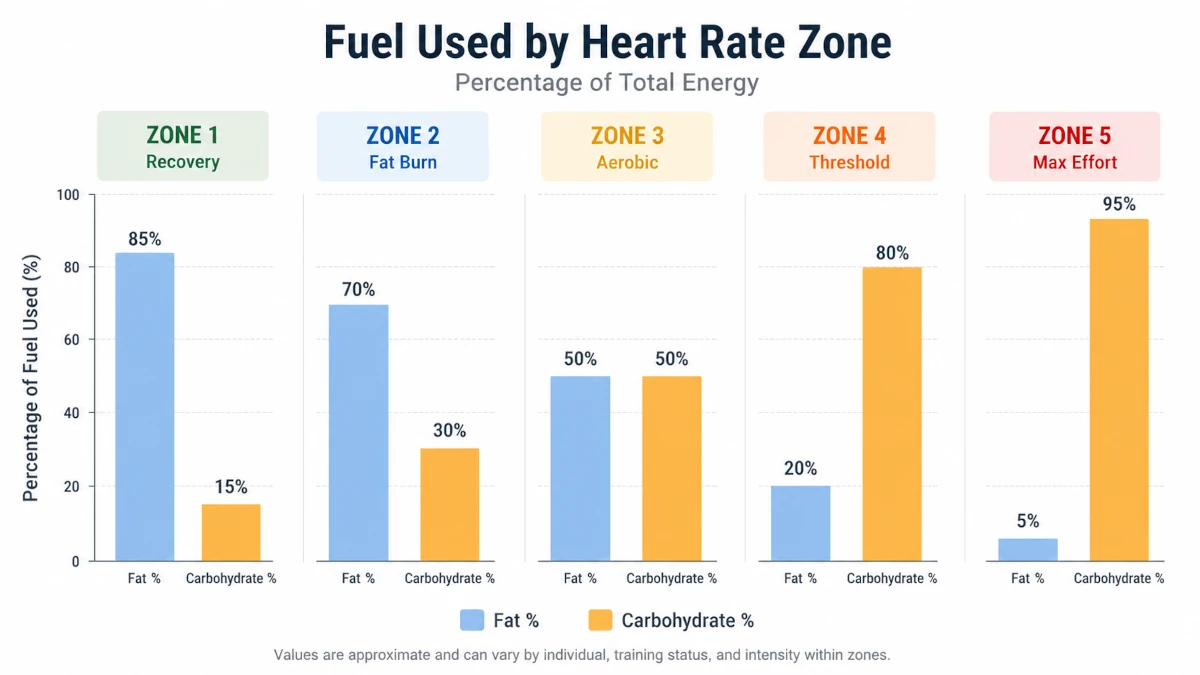
When you exercise, your body pulls energy from 2 main sources: fat and carbohydrates. Which one it draws from, and in what proportion, depends on how hard you're working.
At low-to-moderate intensities, your aerobic energy system does most of the work. It can sustain effort for a long time, and fat supplies much of its fuel. As intensity increases, your body needs energy faster than the aerobic system can supply it, so it starts leaning on carbohydrates, which release energy more quickly but also produce lactic acid as a byproduct.
Fat's share of your fuel is highest at the easiest efforts and shrinks as you work harder. Fat burned per minute is different: it peaks at a moderate effort. In a study of 300 healthy adults, that peak averaged about 62% of max heart rate, which is easier than Zone 2 for most people. In a study of trained cyclists, it came at about 74% of max heart rate, inside Zone 2. So Zone 2 isn't the exact peak for everyone. It's where you still burn plenty of fat while burning more total calories, at an effort you can repeat often.
That said, higher-intensity zones burn more total calories per minute, even though a smaller proportion of those calories come from fat. This is the distinction that trips people up.
The Total Calorie vs. Fat Percentage Question
Here's the nuance worth understanding: Zone 4 will burn more total calories in 30 minutes than Zone 2 will. But a higher percentage of the calories burned during Zone 2 will come from fat, and Zone 2 is sustainable for much longer, which matters a great deal.
Consider 2 30-minute cardio sessions:
- Zone 4 session: Higher calorie burn per minute, smaller proportion from fat, significant fatigue, longer recovery required
- Zone 2 session: Moderate calorie burn, a large share from fat, low fatigue, little to no recovery cost
For someone new to exercise, or anyone focused on building a sustainable fat-loss habit, Zone 2 wins on nearly every practical metric. You can do it more often, for longer, without draining your recovery reserves.
The Cleveland Clinic notes that for people trying to lose weight, exercising in Zones 1 through 3 is generally most effective because the body burns stored fat to fuel those lower-intensity activities. Higher zones shift toward carbohydrate-dominant fuel use. That's not bad, since it still burns calories, but it doesn't have the same fat oxidation efficiency.
What Zone 2 Feels Like
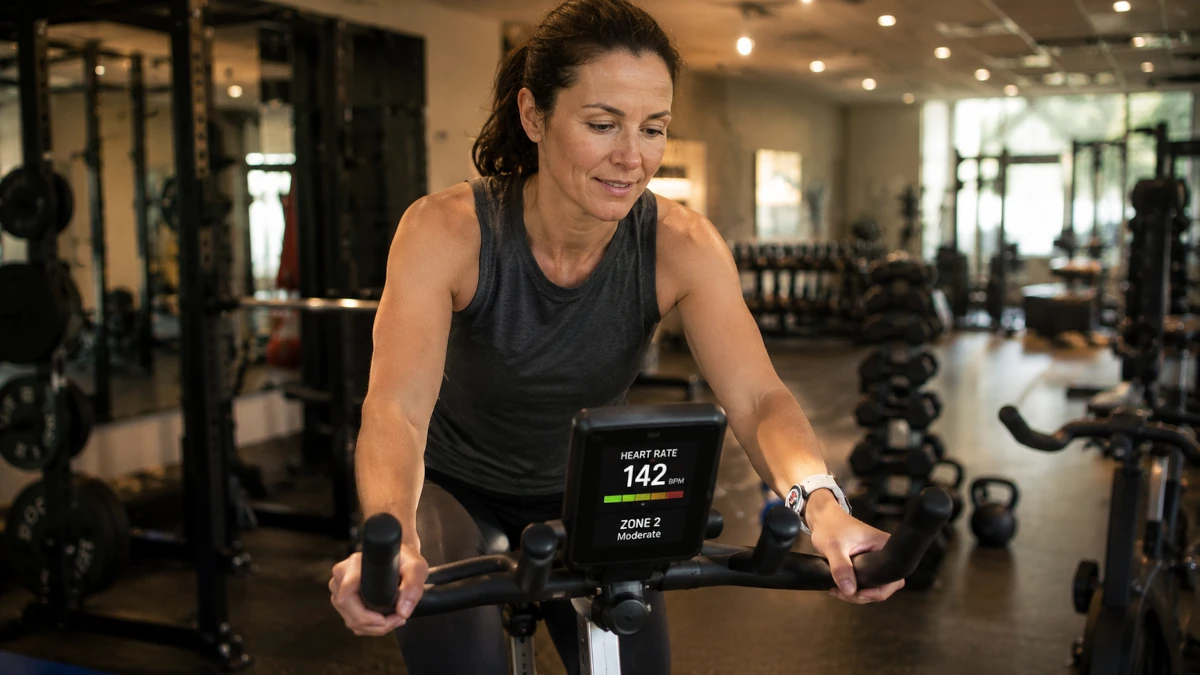
Zone 2 feels like moving with purpose: breathing elevated, but you can still hold a complete conversation without gasping between words.
One of the reasons Zone 2 is underused by beginners is that it feels deceptively easy. If you're used to pushing hard, Zone 2 training can feel almost too comfortable, like you're not doing enough.
That feeling is misleading. Sustained Zone 2 work produces real and measurable adaptations: increased mitochondrial density in muscle cells, improved fat oxidation capacity, a stronger cardiovascular base, and a gradual reduction in resting heart rate over time.
If you're too out of breath to speak in full sentences, you've drifted into Zone 3 or above. Slow down slightly and let your heart rate settle.
For a dedicated look at how Zone 2 specifically supports weight loss, including the full breakdown of fat metabolism at different intensities, see our article on the fat-burning heart rate zone.
How to Find Your Zone 2 Using the Karvonen Formula
The Karvonen formula uses your heart rate reserve, the gap between your resting heart rate and your maximum heart rate, to calculate personalized training zones. It's more accurate than the simple percentage-of-max method because it accounts for your current fitness level.
The formula:
For Zone 2, use 60% and 70% as your intensity values.
Quick example: age 40, resting heart rate 60 bpm → fat-burning zone is 132–144 bpm (max HR 180, heart rate reserve 120, 60–70% of that added back to resting HR).
That's specific, and it's trainable. For the full step-by-step walkthrough of the math with a different worked example, see our guide to finding your fat burning heart rate zone. If you're primarily a runner, our guide to heart rate zones for running walks through the same method with running-specific context.
The Role of Other Zones in Fat Loss
Zone 1 is valuable for recovery days and maintaining regular movement habits. Zone 3 provides cardiovascular fitness benefits and an elevated calorie burn. Zones 4 and 5 build fitness capacity, which lets you handle more total training over time and burn more calories per session.
Being clear about Zone 2 doesn't mean you should avoid all higher-intensity work. A balanced training approach incorporates multiple zones for different reasons.
Most exercise physiologists recommend spending roughly 80% of training time in Zones 1 and 2, with the remaining 20% in Zones 3 through 5. This distribution, sometimes called polarized training, builds the aerobic base efficiently while including enough higher-intensity stimulus to drive continued adaptation. WHOOP's breakdown of heart rate zone training covers how each zone fits into a structured training week.
For beginners, the practical starting point is this: if weight loss is your primary goal, build the habit of regular Zone 2 cardio first. That's where the fat-burning foundation gets laid.
Does Zone 2 Work for Everyone?
For most healthy adults, yes. That said, individual responses to training vary. Factors like fitness level, sleep quality, stress, diet, and hormonal health all interact with how your body responds to zone-based training.
If you have a pre-existing health condition, especially cardiovascular disease, diabetes, or metabolic syndrome, talk to your doctor before starting a new training program. Heart rate zone training is generally safe and well-established, but personalized medical guidance always takes precedence.
Frequently Asked Questions
Can I lose weight training only in Zone 2?
Zone 2 alone can support weight loss, especially for beginners. Over time, incorporating higher-intensity work once or twice a week will accelerate progress by building more overall fitness capacity. But for someone just starting out, steady Zone 2 training is an excellent and sustainable approach.
How long should Zone 2 workouts be?
Most exercise recommendations suggest 30 to 60 minutes for aerobic benefit. Zone 2 is inherently sustainable, so the main limit is time, not intensity. Even 20-minute sessions produce benefit when done regularly.
Is the "fat-burning zone" on gym equipment accurate?
The preset zones on most gym cardio machines use the basic 220-minus-age max heart rate formula without accounting for resting heart rate. They're a rough guide, better than nothing, but less accurate than a Karvonen calculation. The machines also often label their Zone 2 differently from the 5-zone framework described here.
What if I can't stay in Zone 2? It feels too easy.
This is common when you first start using zone training. If Zone 2 feels surprisingly easy, that's a good sign: your aerobic base is functional. The discomfort some people feel is psychological, not physical. The adaptations from sustained Zone 2 training are real, even when the effort doesn't feel dramatic.
Use the free calculator at CalculateMyHeartRate.com to find your personal Zone 2 range. Enter your age and resting heart rate, and you'll have a specific bpm target to train within, not a generic range that could apply to anyone.
Knowing your number changes how you train. Give it a try.
This article is for informational purposes only and does not constitute medical advice. Please consult a physician or certified fitness professional before starting a new exercise program.