How to Choose Your First Heart Rate Monitor
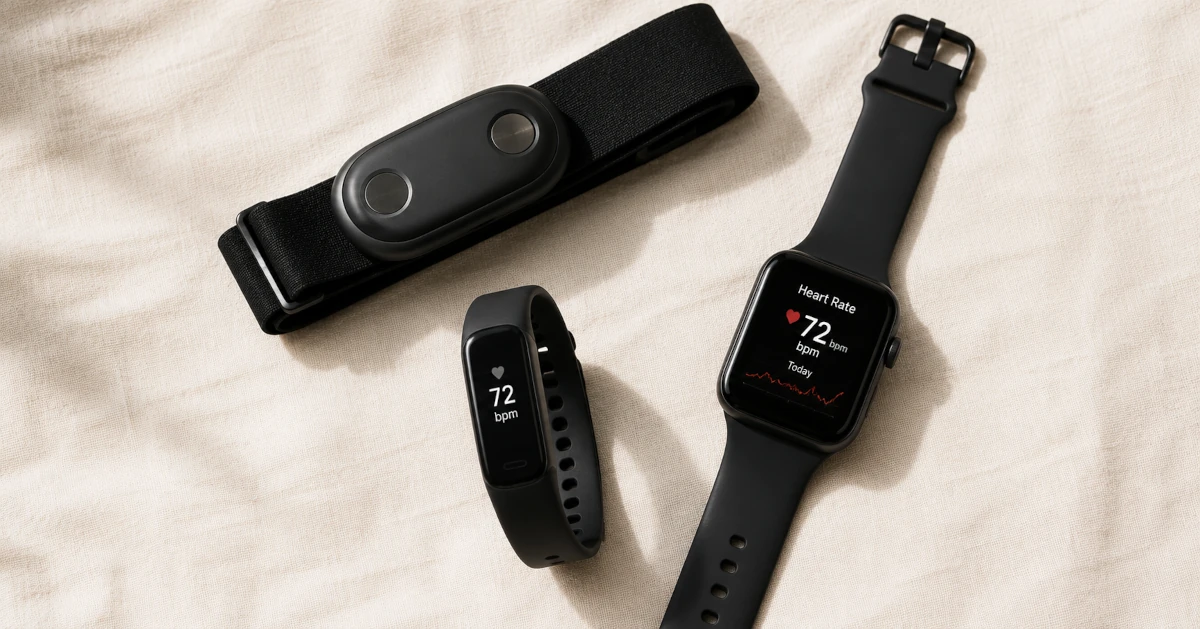
Your watch says 152 bpm on an easy jog, and you can still talk in full sentences. Something's off, and it's usually the watch. Picking the best heart rate monitor for beginners starts with knowing when wrist sensors slip and when they're fine, then matching the device to how you'll use it. A chest strap you wear for runs and a tracker you wear all day are different purchases, and price, accuracy, comfort, and app support pull in different directions.
This list covers 7 options, each the right pick for a specific use case. The quick picks table gives you the short version. Full reviews with specs, pros and cons, and who each device suits follow below.
Do this first: calculate your heart rate zones using the Karvonen formula, which uses heart rate reserve (the gap between your resting and max heart rate) instead of a flat percentage of max heart rate based on age alone. Knowing your Zone 2 range, your target aerobic training zone, before you start training with a monitor means you'll use the data once you have it. Takes about 30 seconds.
| Pick | Best For | Price Range | Link |
|---|---|---|---|
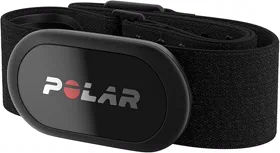 Polar H10 Polar H10 |
Most accurate (chest strap) | $85–$100 | View on Amazon → |
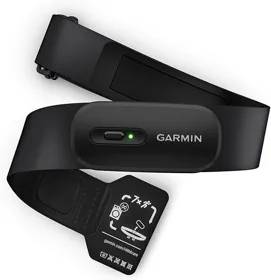 Garmin HRM-200 Garmin HRM-200 |
Gym + app integration | $75–$85 | View on Amazon → |
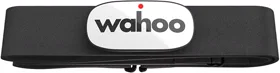 Wahoo Trackr Wahoo Trackr |
Best rechargeable chest strap | $85–$100 | View on Amazon → |
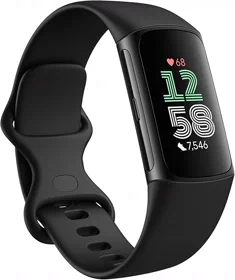 Fitbit Charge 6 Fitbit Charge 6 |
Best wrist tracker overall | $100–$130 | View on Amazon → |
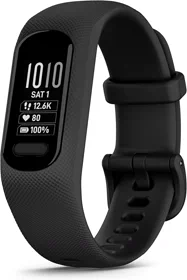 Garmin Vivosmart 5 Garmin Vivosmart 5 |
All-day wear | $100–$150 | View on Amazon → |
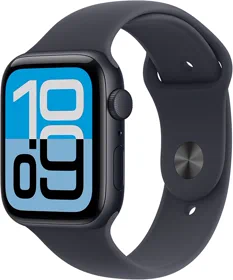 Apple Watch SE 3 Apple Watch SE 3 |
iPhone users | $200–$250 | View on Amazon → |
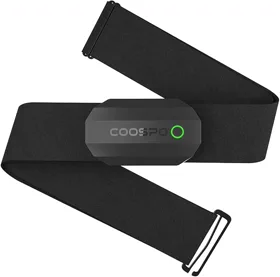 CooSpo H808S CooSpo H808S |
Best under $30 | $25–$35 | View on Amazon → |
Chest straps are listed first, then wrist trackers, with the budget strap last. Your pick depends on the Best For column, not the position.
What to Look for Before You Buy
4 things matter for a beginner buying their first heart rate monitor. Everything else is marketing.
Accuracy: Chest Straps vs. Wrist Sensors
Chest straps detect the electrical signal your heart produces with each beat, similar to how an ECG works. That means they read the signal at its source. Wrist trackers use optical sensors that shine light through the skin and measure blood flow changes, which is an indirect proxy for heart rate.
Under steady-state conditions, both are reasonably accurate. The gap widens with intervals, quick changes in pace, and any activity with a lot of arm movement. A 2017 study in Medicine and Science in Sports and Exercise tested wrist and forearm monitors against an ECG on a treadmill, a stationary bike, and an elliptical. On the treadmill, most devices held up well. On the bike and the elliptical, especially with arm movement, the optical sensors lost accuracy. The chest strap matched the ECG almost exactly in every condition, with an agreement score of 0.996 out of 1.0.
For Zone 2 training, where staying in a specific 10–15 bpm window matters, a chest strap gives you the precision to do it right.
Connectivity: Does It Work With Your Apps?
Most chest straps support both Bluetooth and ANT+. Bluetooth connects to your phone and most apps. ANT+ connects to gym cardio equipment (treadmills, bikes, rowers) and Garmin devices. Having both means more flexibility. Wrist trackers are typically Bluetooth only and connect to their own companion app, which may or may not sync to the apps you already use.
If you use Strava, Garmin Connect, or Apple Health, check that the device you're considering has confirmed compatibility. Most of the options on this list do, but it's worth verifying before buying.
Comfort: Will You Wear It?
A monitor only helps if you wear it. Chest straps require a bit of adjustment to wear correctly, they need to be moistened before use for a reliable signal, and some people find them uncomfortable for the first few weeks. A wrist tracker goes on once and stays on. If regular daily tracking matters to you, the comfort advantage of a wrist tracker is real.
Budget: What's Realistic
Budget chest straps start around $25–$30. Quality chest straps from established brands run $50–$100. Wrist trackers with good HR monitoring start around $100 and go up from there. A $30 chest strap and a $90 one read about the same during steady cardio. The $90 strap lasts longer and holds up better during hard intervals, where a cheaper sensor can lag a few seconds. The gap between a $90 chest strap and a $250 smartwatch is mostly features, not heart rate data quality.
The 7 Best Heart Rate Monitors for Beginners (Reviewed)
Here's the full breakdown on each pick: specs, pros, cons, and who it's right for, starting with the most accurate option.
1. Polar H10: Best Overall Accuracy
The most accurate consumer heart rate monitor available, used in clinical research and trusted by competitive athletes across every endurance sport.
| Spec | Detail |
|---|---|
| Type | Chest strap |
| Connectivity | Bluetooth + ANT+ |
| Battery life | ~400 hours |
| Waterproof | Yes (30m) |
| App compatibility | Polar Flow, Garmin Connect, Strava, Apple Health, most major platforms |
Pros
- ECG-level accuracy across all exercise intensities
- Works with virtually every fitness app via Bluetooth or ANT+
- Long battery life, replaceable CR2025
- Waterproof for swimming and sweaty sessions
- Onboard memory stores 1 workout without a connected device
Cons
- No display, heart rate reads through a paired device only
- Chest strap takes a few sessions to wear comfortably
- Slightly more expensive than competing chest straps
Best for: Anyone who wants the most reliable zone data available from day 1 and plans to stick with heart rate training long-term. The Polar H10 is the benchmark everything else is measured against.
2. Garmin HRM-200: Best for Gym + App Integration
Garmin's current-generation chest strap, replacing the discontinued HRM-Dual with better water resistance, HRV data, and 3 concurrent Bluetooth connections. It lists at $79.99, about $20 more than the HRM-Dual did.
| Spec | Detail |
|---|---|
| Type | Chest strap |
| Connectivity | Bluetooth (3 simultaneous) + ANT+ (unlimited) |
| Battery life | ~365 hours (CR2032, replaceable) |
| Waterproof | 3 ATM (30m) |
| App compatibility | Garmin Connect, Tacx, Strava, most Bluetooth and ANT+ fitness apps |
Pros
- 3 concurrent Bluetooth connections plus unlimited ANT+: pairs to a phone, a gym machine, and a Garmin watch simultaneously
- 3 ATM water resistance, handles swimming, not only sweat
- Adds heart rate variability (HRV) data over previous Garmin straps
- Machine-washable strap, user-replaceable CR2032 with a redesigned tool-free battery compartment
- Deep Garmin ecosystem integration, feeds data directly to Edge cycling computers and compatible watches
Cons
- Battery life (~365 hours) is notably shorter than the HRM-Dual's multi-year runtime
- No onboard memory or display
- Garmin Connect is required to access HRV and full data history
Best for: Garmin device owners, gym regulars using ANT+ cardio equipment, and anyone who wants swim-safe water resistance at a mid-range price. Compared to the Wahoo Trackr at a similar price, the HRM-200 wins on water resistance and the Garmin ecosystem. The Trackr wins on rechargeable convenience and Zwift integration.
3. Wahoo Trackr: Best Rechargeable Chest Strap
Wahoo's fully redesigned replacement for the discontinued TICKR, built from the ground up with a rechargeable battery, 3 simultaneous Bluetooth connections, and the same electrode-based accuracy as other quality chest straps.
| Spec | Detail |
|---|---|
| Type | Chest strap |
| Connectivity | Bluetooth (3 simultaneous) + ANT+ |
| Battery life | 100+ hours (rechargeable, USB-C) |
| Waterproof | Water-resistant (IPX7) |
| App compatibility | Wahoo, Strava, Zwift, most Bluetooth and ANT+ training apps |
Pros
- Rechargeable via USB-C, no coin cell batteries to buy or replace
- 3 concurrent Bluetooth connections (phone, tablet, and a gym display simultaneously)
- ANT+ for treadmills, bikes, and other cardio equipment
- Lightweight at 12g pod, accurate at all exercise intensities
- Strong integration with Zwift and Wahoo ELEMNT cycling computers
Cons
- At $89.99, it's priced alongside the Polar H10, no longer a budget-tier pick
- IPX7 rated but not suitable for swimming
- Wahoo's companion app is functional but less polished than Polar Flow or Garmin Connect
- Requires periodic charging rather than an occasional battery swap
Best for: Zwift users, cyclists, and anyone who prefers USB-C recharging over disposable coin cells. The 3-device Bluetooth broadcasting is useful if you train with multiple displays or switch between a phone and a cycling computer mid-session. Compared to the Polar H10 at a similar price, the Trackr wins on connectivity flexibility. The H10 wins on swimming and onboard memory.
4. Fitbit Charge 6: Best Wrist Tracker Overall
The most capable all-around wrist tracker for everyday athletes who want workout tracking, daily activity, and sleep monitoring in a single device.
| Spec | Detail |
|---|---|
| Type | Optical wrist sensor |
| Connectivity | Bluetooth (Fitbit/Google app) |
| Battery life | ~7 days |
| GPS | Built-in |
| App compatibility | Fitbit (Google), Strava via sync, no official Apple Health sync |
Pros
- All-day heart rate, steps, stress, and sleep tracking in 1 device
- Built-in GPS means accurate pace and distance without a phone
- Google Maps and Google Wallet integration for runs and errands
- 7-day battery means charging about once a week
Cons
- Optical sensor lags behind actual heart rate during sudden intensity changes
- Requires a Google/Fitbit account to use fully
- No official Apple Health sync, so iPhone users need a third-party app
- HR data is less precise for zone-based training compared to chest straps
Best for: Beginners who want 1 device that covers workouts, daily movement, and sleep. Not the tool for precise interval training, but a good fit for steady everyday tracking.
5. Garmin Vivosmart 5: Best for All-Day Wear
A slim, understated fitness tracker that handles all-day health monitoring comfortably without looking or feeling like a workout device.
| Spec | Detail |
|---|---|
| Type | Optical wrist sensor |
| Connectivity | Bluetooth (Garmin Connect) |
| Battery life | ~7 days |
| GPS | Connected GPS (via phone) |
| App compatibility | Garmin Connect, Strava via sync |
Pros
- Slim profile, comfortable for all-day and overnight wear
- Strong sleep tracking with sleep score and recovery feedback
- Pulse Ox (blood oxygen) monitoring during sleep
- Syncs well with Garmin ecosystem, useful if you plan to upgrade to a Garmin watch later
Cons
- No built-in GPS, relies on phone for outdoor route tracking
- Small screen, not easy to read in bright sunlight
- HR accuracy during high-intensity exercise is average for optical sensors
Best for: People who want an unobtrusive health tracker focused on daily activity, sleep, and recovery rather than detailed workout metrics.
6. Apple Watch SE 3: Best for iPhone Users
If you have an iPhone and want a device that handles heart rate tracking, workout logging, and daily life in 1, the Apple Watch SE 3 is the most practical option on this list.
Weighing it against a Garmin instead? The 2 default to different zone math out of the box, see Apple Watch vs. Garmin heart rate zones for how each one calculates zones and how to get accurate Karvonen numbers on either.
| Spec | Detail |
|---|---|
| Type | Optical wrist sensor |
| Connectivity | Bluetooth, Wi-Fi (iPhone required) |
| Battery life | ~18 hours (up to 32 hours, Low Power Mode) |
| GPS | Built-in |
| App compatibility | Apple Health, Strava, Nike Run Club, most iOS fitness apps |
Pros
- Deep Apple Health integration, data feeds directly into the Health app
- Large iOS app ecosystem with hundreds of compatible fitness apps
- Fall detection and emergency SOS
- Comfortable for both workouts and daily wear
Cons
- Only works with iPhone, no Android support
- 18-hour standard battery means near-daily charging (32 hours in Low Power Mode)
- Optical HR sensor, not as precise as a chest strap for zone training
- The most expensive option on this list
Best for: iPhone users who want a single device that covers heart rate, GPS, activity tracking, and the broader Apple Health ecosystem, and who don't mind charging nightly.
7. CooSpo H808S: Best Under $30
A bare-bones chest strap that does 1 thing reliably: measure your heart rate accurately enough for zone-based training, at a price that removes every excuse not to try it.
| Spec | Detail |
|---|---|
| Type | Chest strap |
| Connectivity | Bluetooth + ANT+ |
| Battery life | ~300 hours |
| Waterproof | IP67 |
| App compatibility | Most Bluetooth and ANT+ training apps |
Pros
- Usually $25–$35, and often under $30 on sale
- Dual Bluetooth and ANT+ connectivity
- Accurate enough for steady-state Zone 2 training and general cardio
- Simple pairing, minimal setup
Cons
- Build quality feels noticeably cheaper than Polar or Garmin
- No onboard memory
- Limited brand support if the hardware fails
- Strap comfort is serviceable but average
Best for: Beginners who want to try chest-strap training before committing $80–$100, or anyone who needs a backup sensor.
Chest Strap vs. Wrist Heart Rate Monitor
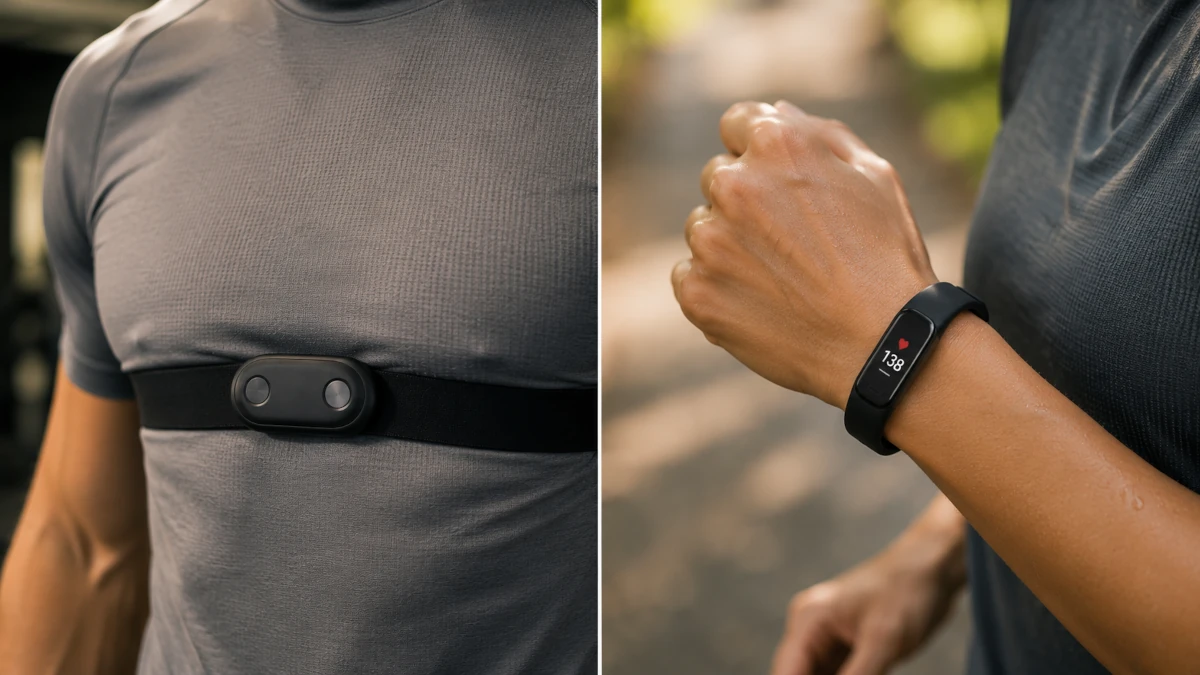
Pick between a chest strap and a wrist tracker based on how you exercise. Each one wins in a different setting.
| Chest Strap | Wrist Tracker | |
|---|---|---|
| Accuracy | ECG-level | Good for steady-state, less reliable at high intensity |
| Comfort | Adjustment needed, not for all-day wear | Wear all day without noticing |
| Price | Often cheaper ($25–$100) | Mid-to-high range ($100–$250) |
| Battery | Hundreds of hours | Days (requires regular charging) |
| Best for | Workout sessions, zone training | All-day monitoring, sleep, daily activity |
For zone-based training, where you need to know in real time whether you're in Zone 2 or Zone 3, a chest strap gives you data you can trust. For general health awareness, sleep tracking, and daily step counting, a wrist tracker is more practical because you'll wear it.
Some people use both: a chest strap during workouts, a wrist tracker for the rest of the day. That setup gives you accurate workout data and continuous daily monitoring without the trade-offs of either alone.
How to Use a Heart Rate Monitor as a Beginner
Getting value from a heart rate monitor requires 2 things: knowing your zones and then glancing at your heart rate often enough to stay in the right one. Here's how to get started.
Step 1: Calculate your zones first. Use the Karvonen heart rate calculator to find your 5 training zones. You need your age and resting heart rate, measured on 3 consecutive mornings before getting out of bed. The Karvonen method accounts for individual cardiovascular fitness in a way that age-based formulas like 220 minus age don't.
Step 2: Pair and test before your first workout. Pair your monitor to your chosen app, then sit still and confirm your resting heart rate reads in the right ballpark (most adults are somewhere between 55 and 80 bpm at rest). If it's reading 130 bpm while you're sitting on the couch, something is wrong with the pairing or the electrode contact.
Step 3: During your workout, check every few minutes. You don't need to stare at the number constantly. A glance every 2 to 3 minutes is enough to notice if you've drifted out of your target zone. Don't be surprised if you've been exercising 10–20 bpm above Zone 2 without realizing it. For more on what that drift looks like, see the beginner's guide to target heart rate zones.
Step 4: Review the post-workout data. Time in each zone is the metric that matters most. If you were aiming for Zone 2 and spent most of the session in Zone 3, the data tells you to slow down next time.
Step 5: Track trends over weeks, not sessions. A single workout's heart rate data tells you little. After six to eight weeks of steady Zone 2 training, a downward trend in heart rate at the same effort level is the clearest sign that your cardiovascular fitness is improving. That's the number worth watching.
Frequently Asked Questions
What is the most accurate heart rate monitor for home use?
The Polar H10 is the most accurate option for home training. It uses an ECG-style chest electrode that reads the heart's electrical signal directly rather than estimating from blood flow like optical wrist sensors. The accuracy advantage over wrist trackers is most noticeable during interval training or any exercise that involves arm movement.
Do I need a heart rate monitor as a beginner?
You don't need one, but it removes a lot of guesswork. The talk test, being able to hold a full conversation without gasping, works as a rough check for Zone 2. A monitor tells you exactly which zone you're in. For beginners trying to build aerobic fitness through sustained Zone 2 training, that precision tends to matter more than people expect once they start using one.
Is a $30 heart rate monitor accurate enough?
For steady-state cardio and Zone 2 training, yes. Budget chest straps like the CooSpo H808S use the same basic electrode technology as premium monitors. The accuracy gap with a Polar H10 becomes meaningful during high-intensity intervals, where a cheaper sensor may lag a few seconds. For most beginners logging moderate-intensity sessions, that lag is not a practical issue.
Can I use my phone to measure heart rate?
Some phones use the camera and flash to detect blood flow through your fingertip, giving a rough resting heart rate. This works reasonably well at rest but is not usable during exercise. A dedicated sensor, either a chest strap or wrist tracker, is necessary for training use.
What heart rate monitor works with Strava and Apple Health?
The Polar H10, Garmin HRM-200, and Wahoo Trackr all pair with the Strava app over Bluetooth. ANT+ is for Garmin watches and gym equipment, not the Strava phone app. For Apple Health, Polar Flow, Garmin Connect, and the Wahoo app all sync workouts through their iOS apps, and the Apple Watch SE 3 writes to Apple Health natively. The Fitbit Charge 6 has no official Apple Health connection, so iPhone users need a third-party sync app.
The Verdict
For most beginners who want a dedicated workout chest strap, the Polar H10 is the pick: the best accuracy on this list, around 400 hours per coin cell, and support for nearly every app. If you own a Garmin watch, train on ANT+ gym machines, or swim, the Garmin HRM-200 fits better, with 3 simultaneous Bluetooth connections, unlimited ANT+, and 3 ATM water resistance. If you'd rather recharge than swap coin cells, the Wahoo Trackr is the choice at a similar price, and its Zwift integration makes it the easy call for indoor cyclists. If you want something on your wrist all day rather than a chest strap for workouts only, the Fitbit Charge 6 is the most capable option in that category. And if you're on a tight budget and want to try zone training before committing, the CooSpo H808S costs around $30 and does the job.
Whichever you choose, it's worth pairing it with a solid understanding of your training zones. Use the Karvonen calculator to find your Zone 2 range before your first session. The monitor gives you the number. Knowing what that number means is what makes it useful.
This article is for informational purposes only and does not constitute medical advice. Please consult a physician or certified fitness professional before starting a new exercise program. Product prices and availability change frequently. Verify current pricing before purchasing.